
Grasping June
Everything is blooming most recklessly; if it were voices instead of colors, there would be an unbelievable shrieking into the heart of the night. — Rainer Maria Rilke

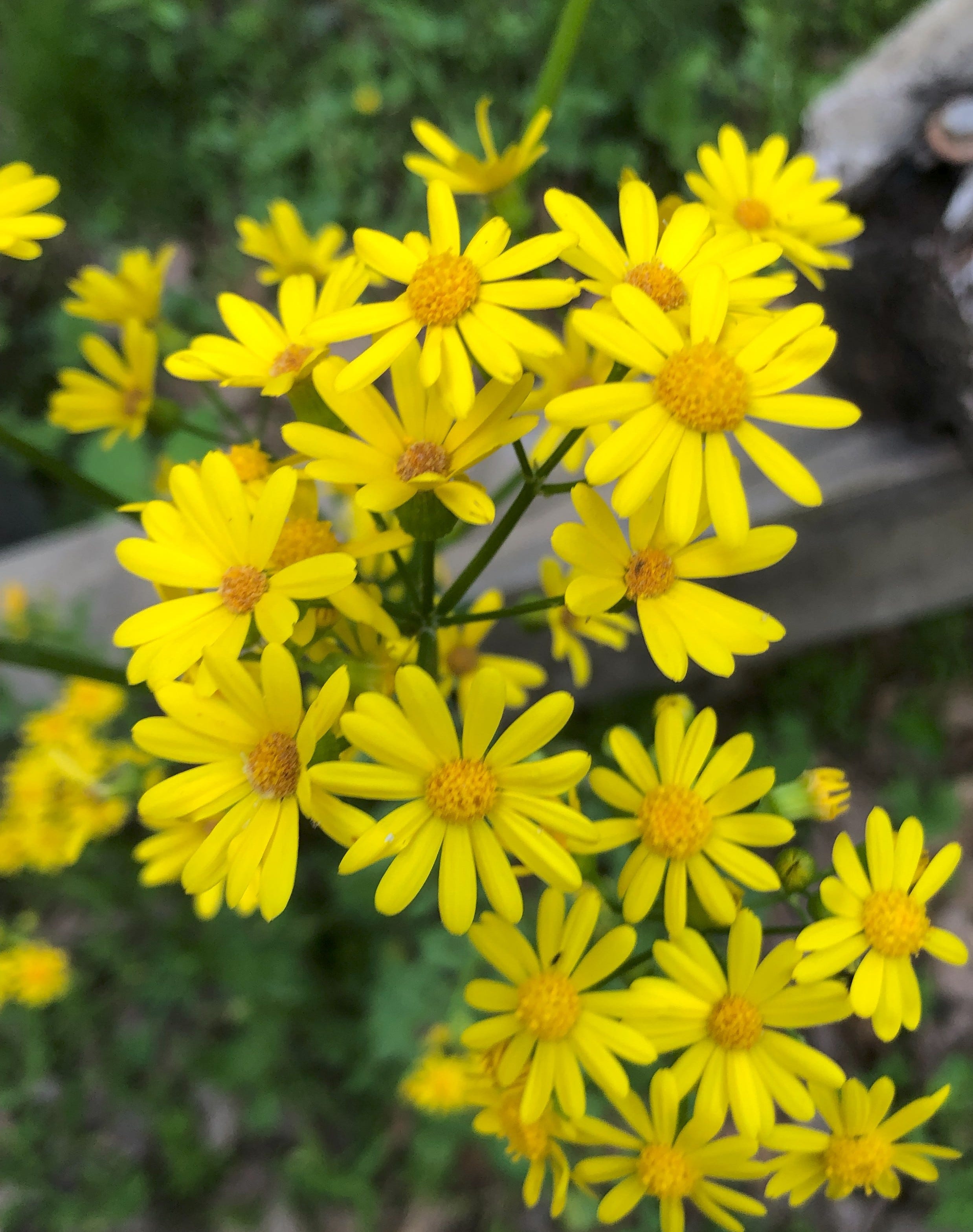
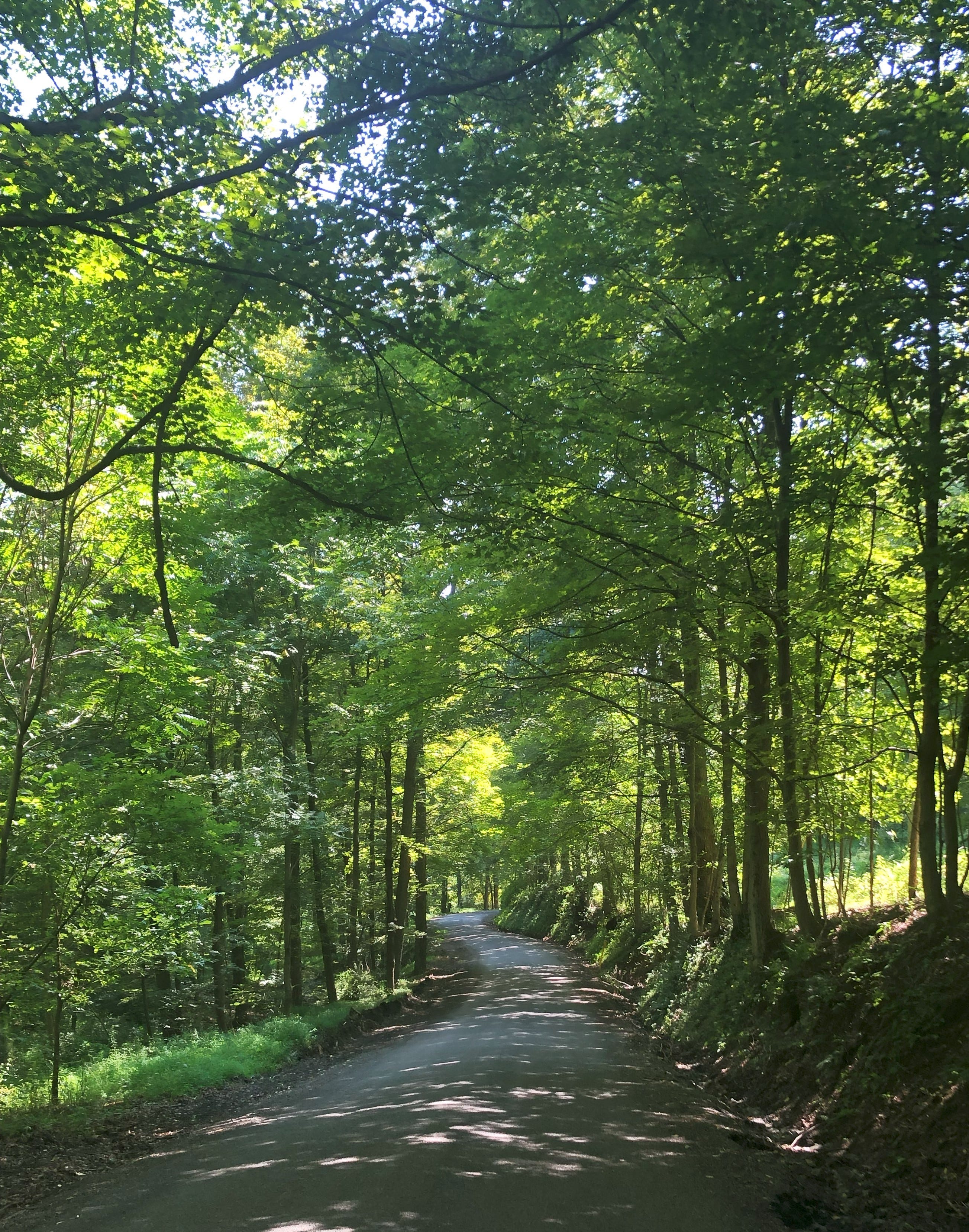
We would die of excitement if we fell asleep in February and woke to the overflowing green of June. Perhaps I exaggerate, but June, too, exaggerates. This sixth month of the year, named after Juno, the Roman goddess of marriage and childbirth, the protector, exaggerates in green.
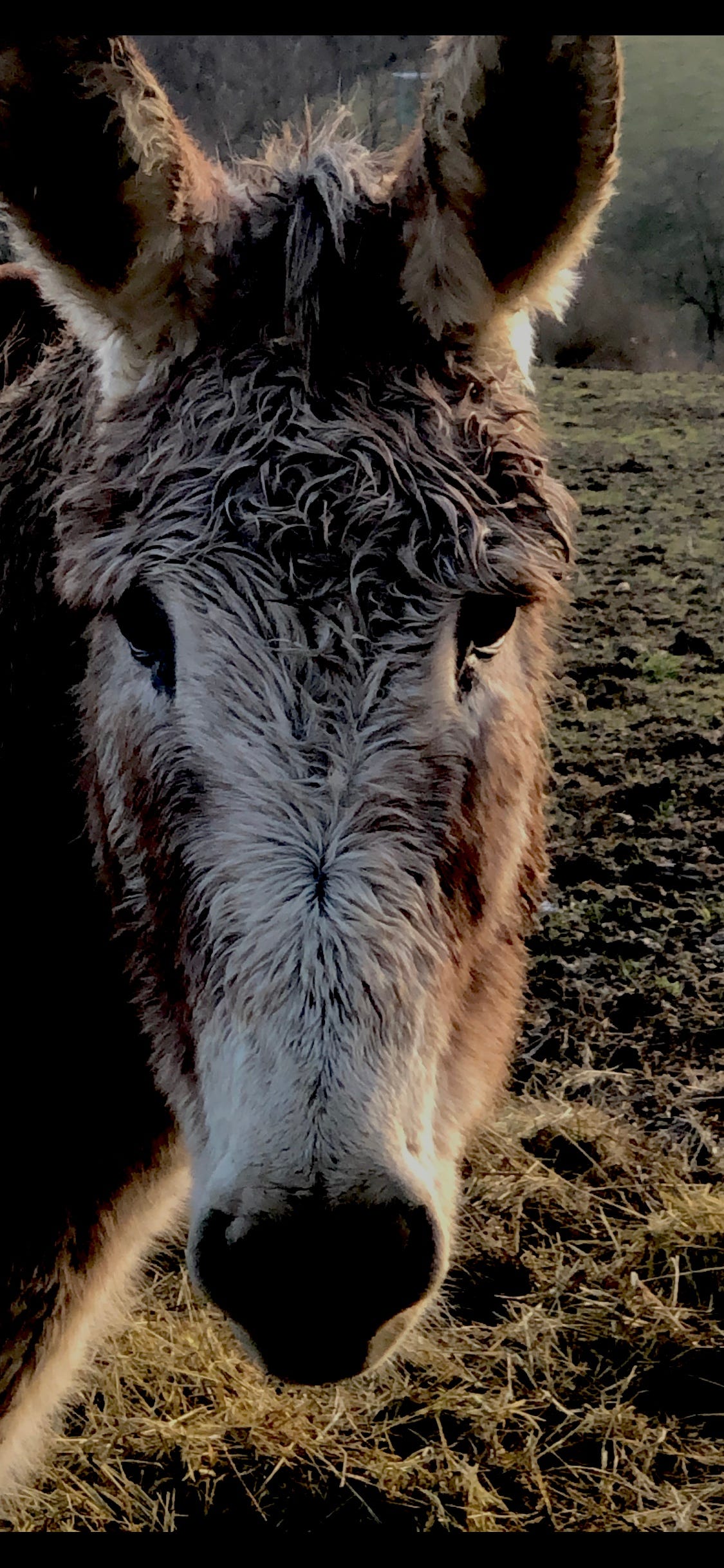
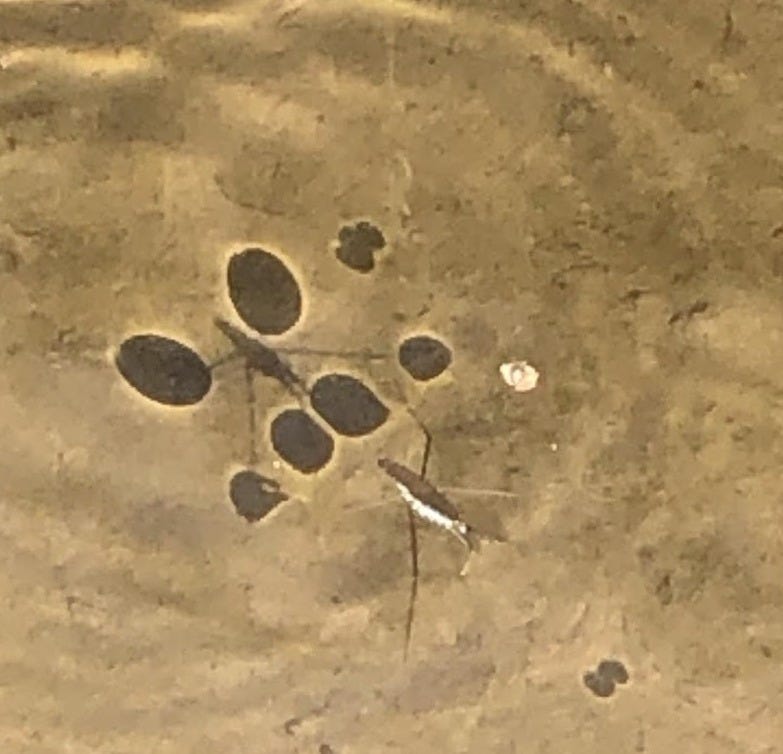
If not death, at least hysteria, the green too much of a shock for a body to absorb. We would need a spider’s eight eyes to take it all in. We would paddle in dazed circles like water striders on a calm puddle, our reflections psychedelic shadows. We would bray like startled donkeys.
So the world gives us March and April, fits and starts, zigs and zags, a late frost, a late snow, then May steadies us until a week of cold rains are tossed our way. We wait. We grumble. We take jackets off and on. Fiddle with the thermostat. Grumble again. Go to bed. Wake up. And finally, finally it’s June with its overwhelm of greens, the month brought forth from the robin’s song, its short yellow beak pointing and tilting the earth and summoning the sun, lengthening the shadows of trees, stretching them long like fingers gently resting on the hillside.
Green arrives to testify. We dunk our heads in fonts of green. We remind ourselves we aren’t fools to believe. Life is hard, we know. And yet, we are reborn again and again in our lifetimes, as many times as we must, as many times as we are willing. Green is our gospel, our conduit to all that is good and mighty. Green is our salvation.
We roll in this green for three weeks, thinking this is how life should always be, how we want it to always be easy-green as June offers up the solstice, a time of the “sun standing still.”
And sometimes for us too, life can stand still. Jim Harrison wrote of one moment saying “no to the next.” This is what we hope for. We want to say no thank you, I’ll just stay here with this moment. These are fleeting, precious days, days the breath comes easier, days I’m not rushed and the garden peas are fresh and the bird feeders are full and the frogs let me get close before they jump in the pond. The peonies are sassy and plump and those I love are safe and, if one gives oneself the grace of avoiding the news for a day, not as an act of avoidance or non-caring, but as an act of regeneration, one can feel reborn.


June is my gluttonous joy, filling me with venison burgers topped with garden romaine and cold Coronas with extra lime. Maybe Emily walks around the corner of the house hand-in-hand with Kurt and a container of her homemade vanilla ice cream with strawberry rhubarb sauce. Perhaps Jeff quits work early and Jesse has a fishing story to tell and a soul reviving playlist ready. And maybe more people we love come for dinner and the laughter bounces right back down from the peaked porch roof. And maybe I can breathe it all in, store it in my cells to be used on days that aren’t so easy.
June is green lust, finally sated, a moment held still.
But in a mind never satisfied for long, lust turns into June green greed, the green that makes me want to cling, to hold on, to keep everyone I love gathered together, tucked away in a moss-lined nest melded to the sturdiest oak. June makes me ask for more: more safety, more time, more health, more distance from the truth that everything changes. I want Juno’s power to protect.
How do we learn to live our lives without this power to protect, where we embrace the gift of just being alive, for gravity holding us in place one more day, keeping us from floating away with our aimless thoughts, when our natural tendencies are to cling to the good and run, duck, and dodge from all that we fear and dislike? How to live the full catastrophe of life, a concept familiarized by mindfulness expert Jon Kabat-Zinn, to be fully alive while we live, feeling all of it, joys, horrors, hardships, ease, messiness, how to embrace the inconsistencies, terror and disappointment inherent in all of life? How do we learn to let these feelings keep us tender and vulnerable and force a remembering of how much we love those we love?
June is better at hiding the catastrophe than other months. Yet, even the sparrow-singing, cricket-chirping, frog-ribbeting, everything-is-green and growing and life-is-swirling zest of June can give us practice. Notice how green suffocates spring ephemerals and pushes other wildflowers out to the edges. Tree sparrows fly thousands of miles only to be plucked from the sky by crows and hawks feeding their own hungers. Frogs are swallowed whole by snakes. The fox eats the cricket. It all happens in a moment that couldn’t hold.
Green can leave us dizzied, out of balance, reeling and walloped, complacent and unaware. You could walk near my daughter's bloom-filled garden of lupines, delphiniums, and native geraniums, the colors and insect whimsy capturing your attention, the scent of a creamy rose grabbing your shoulders and pulling you near. You could be lost in a moment.
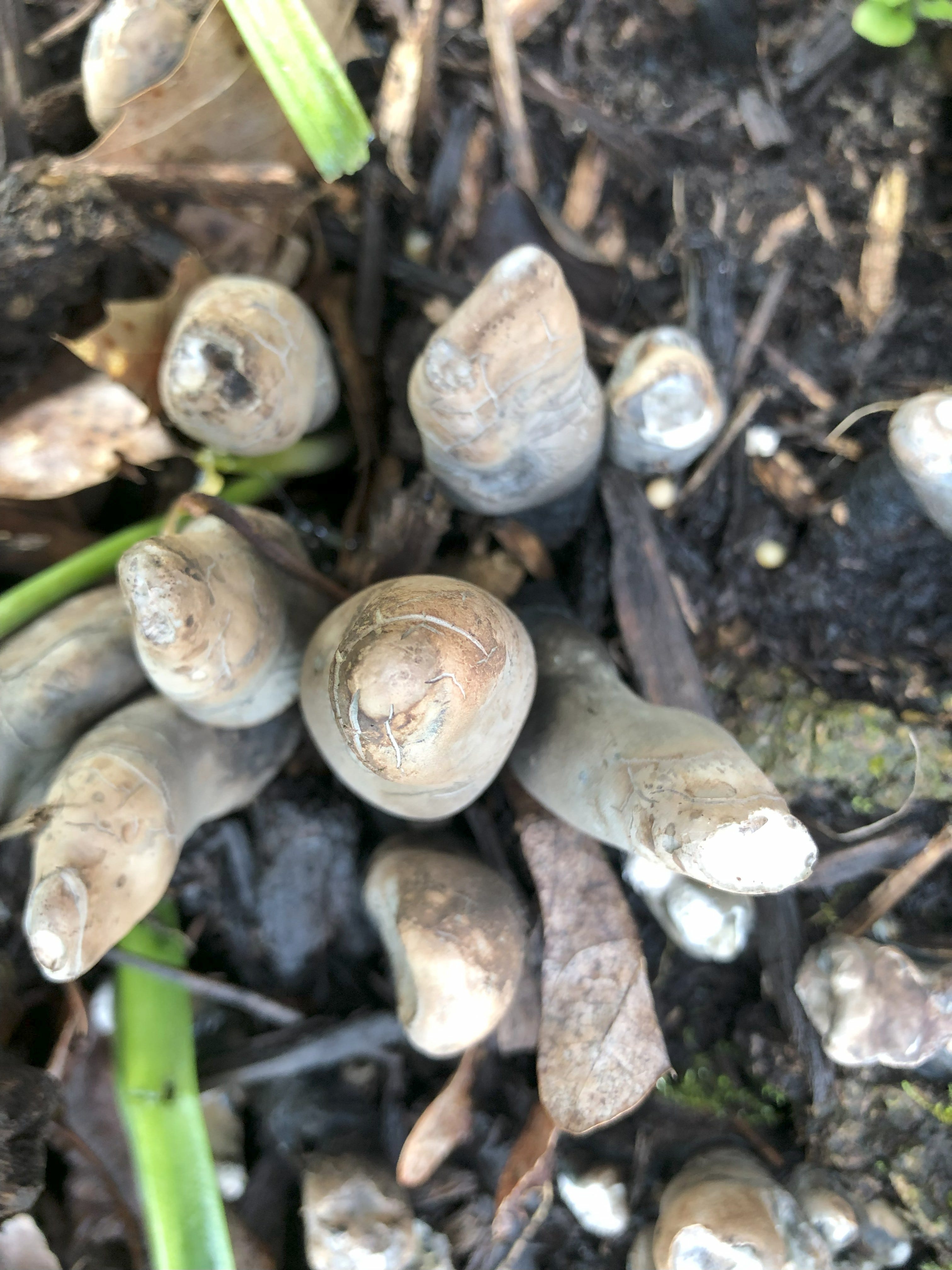
But look closer to the ground. Look at the stump of the black walnut tree planted too close to the house by a gray squirrel. Look and you will see the eerie dead man’s fingers fungi. They reach up from the underworld. They want our attention.
*
The doctor chased us down the stairs, his melodious Spanish accent assuring my husband and everyone near, you will still be able to perform. We had just left his office where he had diagnosed my husband with testicular cancer. We were in survival, not performance mode, and replied with meek thank yous as we walked to the parking garage to hop in the truck that would break down on the way home. We had a nearly two-year-old daughter and I was pregnant with our son. He had a business loaded with debt. And no disability insurance because healthy men in their very early thirties don’t get cancer, we thought.
At a later visit, the doctor said, once you have cancer, you always have cancer, not meaning that you necessarily have any trace of disease, but that the thought lingers, a snake without charmer sometimes rising up through your body, hood flared, venom filled fangs ready to dig into muscle and pulse terror through every single cell. Bumps are no longer bumps. How long should a fever last, a cough, a bruise? What is regular tiredness that comes with aging?
You want to hit the lottery and buy a doctor and an at home PET scanner, a CT scanner, figure out contrast and when to use it, where to buy the dye. Also, perhaps add an MRI machine and a blood spinner so that you can test him daily. You want to buy an accountant to sort through medical bills and insurance denials. You are convinced the insurance company wants you both to die from fear and overwhelm before he is done with his radiation treatments so they can pay less.
You are grateful he had the good testicular cancer and not the bad.
He wonders why his body failed him.
You stick your daughter in the carseat and she plays in the playhouse in the radiation waiting room and you see how you are luckier than most. You leave feeling depleted, guilty even, and stunned.
He starts to drive himself.
He comes home and sits for a minute and returns to work.
You read your daughter three books each night before bed and give birth to your son. You breastfeed and push strollers and change diapers. You cook meals and fold laundry and scrub kitchen floors. You make sure the dogs and chickens are fed. You sort out bills and insurance claims during Sesame Street. You manage.
From emotional necessity you become the mother of prevention. When your kids are older and return from a friend’s house, you ask not what did you do, but what did you eat? You add enough grapes and pineapple to make the kale smoothies palatable and grind them extra long to hide the flax seed. You make all the soup from scratch. You expand the garden. You drive an hour to the grocery store to buy organic. People tell you that you are wasting your money. You don't try to explain your need to protect.
There are months you cannot remember.
Then, because you are luckier than most, there are days you notice you are breathing again. And then months. There are months between scans, and then a year, and it is time for a scan and you aren’t worried but then you get good results and realize you had indeed been holding your breath again. You are always braced for catastrophe. You smile and laugh, genuinely, because you are luckier than most, but you know the curtain can be quickly drawn back and there is no goddess. Behind all the green of Oz, there is only a man who says, I don’t know how it works and floats away, leaving you stranded.
Because you are luckier than most, your kids are now in their twenties. They are lovely creatures. Your life remains full, yet there are days filled with fear and anger.
You fill up and overflow with so much anger because he works so much and you are still afraid of losing him. Your fears are tucked behind ribs trying to keep the snake caged, a snake coiled around heart and lungs, waiting for its chance. You want time, and not even a lot. You know that despite this lucky life you have had, you would feel cheated if he died now. Not cheated because you deserve more than the billions of others throughout time who have lost, but cheated because it could have been different, these parts of life that are based on choice and not fate.
Then he has imperfect blood work and you hate yourself for ever being angry.
*
June hangs in balance for a day. Then even with all the green, all the life hidden in green, hopping and flying and chewing through green, the June we learned to trust tilts. The June we thought would hold us, balance us, tips us right over. Ever so slowly at first, the light surrenders back to the dark, a minute or two per day, a little less light easily not noticed. June upended us, tilted us toward July, August, toward accelerating loss, a terrifying term. Three minutes lost per day, twenty-one minutes gone in a week. We are soon cloaked in darkness again.
*
Even if we are lucky and also have a long second half, the terror remains in waiting for the catastrophe. One does not live to be 56 without the accumulation of love and fears along the way, and also as we age, the acceleration of fears, of the knowledge that life will continue to happen and that there is no choice but to go on.
There is a rush to grow in June when the canopy is full and able to capture the light necessary to create life and store energy to continue through cold, stark winters. Cellulose and lignin remain in a dance to provide the rigidity trees need to reach toward the sun and the flexibility to survive storms.
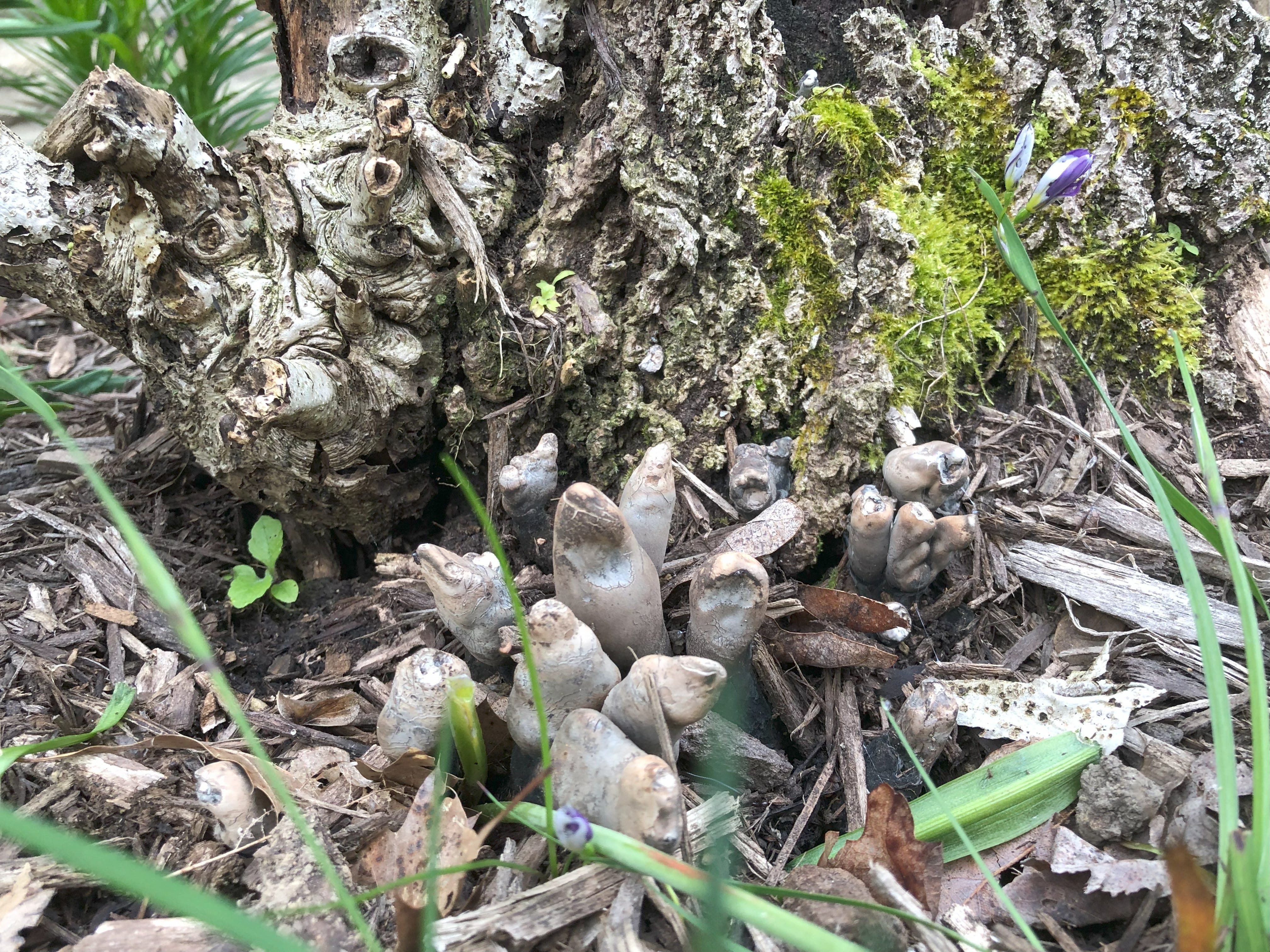
The dead man’s fingers growing in my daughter’s garden are saprobic, the decomposers. They break things apart. They consume the compounds that keep the cellulose and the lignin joined together. They chip away at what kept the tree in tree form.
We learn to grow in what’s left. It is hard to not be haunted by these worn out fingers that look like they’ve been down there a while and don’t really like it. Fingers tentative, furious, gripping rock and root to pull their way up, fingers that maybe wanted to finish a project, hard working fingers that held pick and shovel, ax and maul, that pulled the trigger and skinned the deer. Fingers that worked.
Or maybe those fingers wanted out to hold a hand, turn a page and read one more poem, or maybe just cut another piece of sour cherry pie and spend an afternoon on the porch. These crumpled, crippled, grasping fingers, fingers now too broken to knit or write or pull chicken from bone for February soup, but still hoped for more time.
Maybe these fingers are pulling up, gripped in hope of another chance.
But that is the full catastrophe. We cannot be protected from this truth. There is no second chance. One moment never says no to the next.
Postscript: I wrote this in June. We found out in July that there are no signs of cancer, because we are luckier than most.
Beautiful and beautifully written. Thank goodness for no cancer. And yes, that pall hovers.